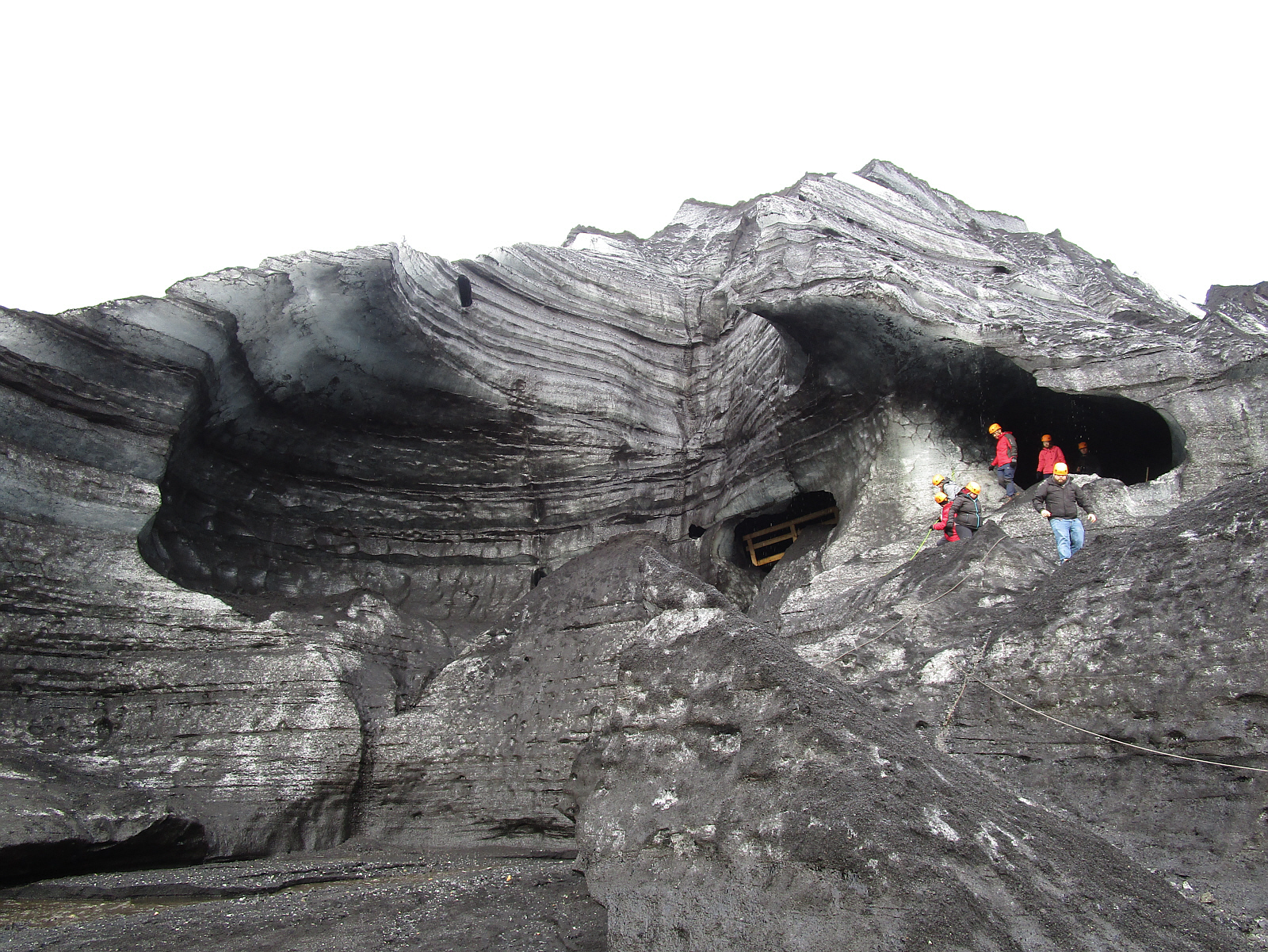
Our group puts on helmets and crampons (spikes that go on your shoes to help with traction on ice -- which work great by the way), and headed into the small, natural ice cave to explore. Lava dust (as black as charcoal), covers the surface of the ice as we climb up to the entrance.
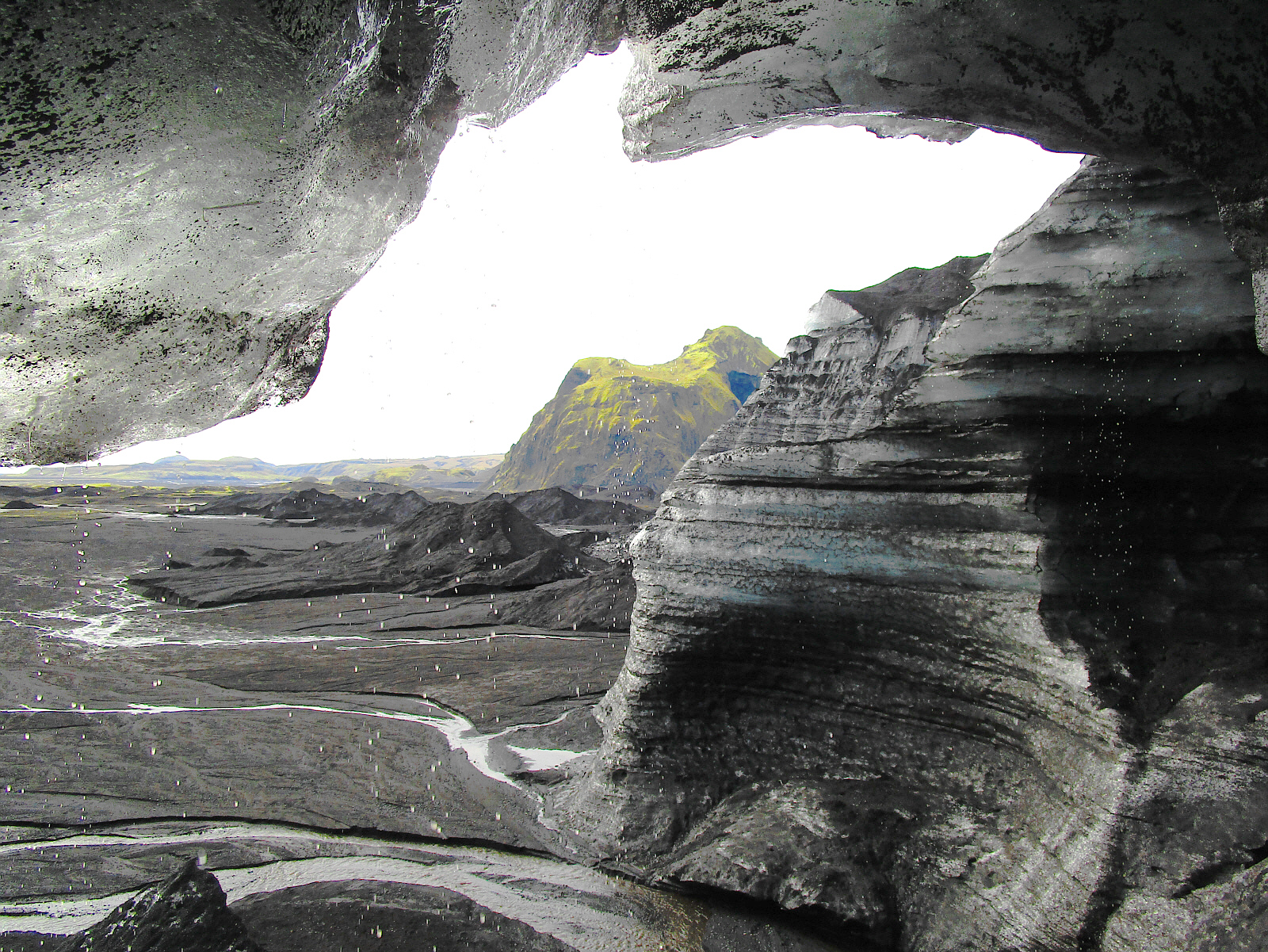
Inside, we can look out 'windows' in the cave wall where parts of the ice have collapsed or melted. Other parts of the cave are dark, and we use flashlights to move around. These caves are formed naturally (usually by melt-water or air currents creating an opening). It's not a huge cave (ice caves usually aren't) -- so about 10 minutes of exploring covers it all.
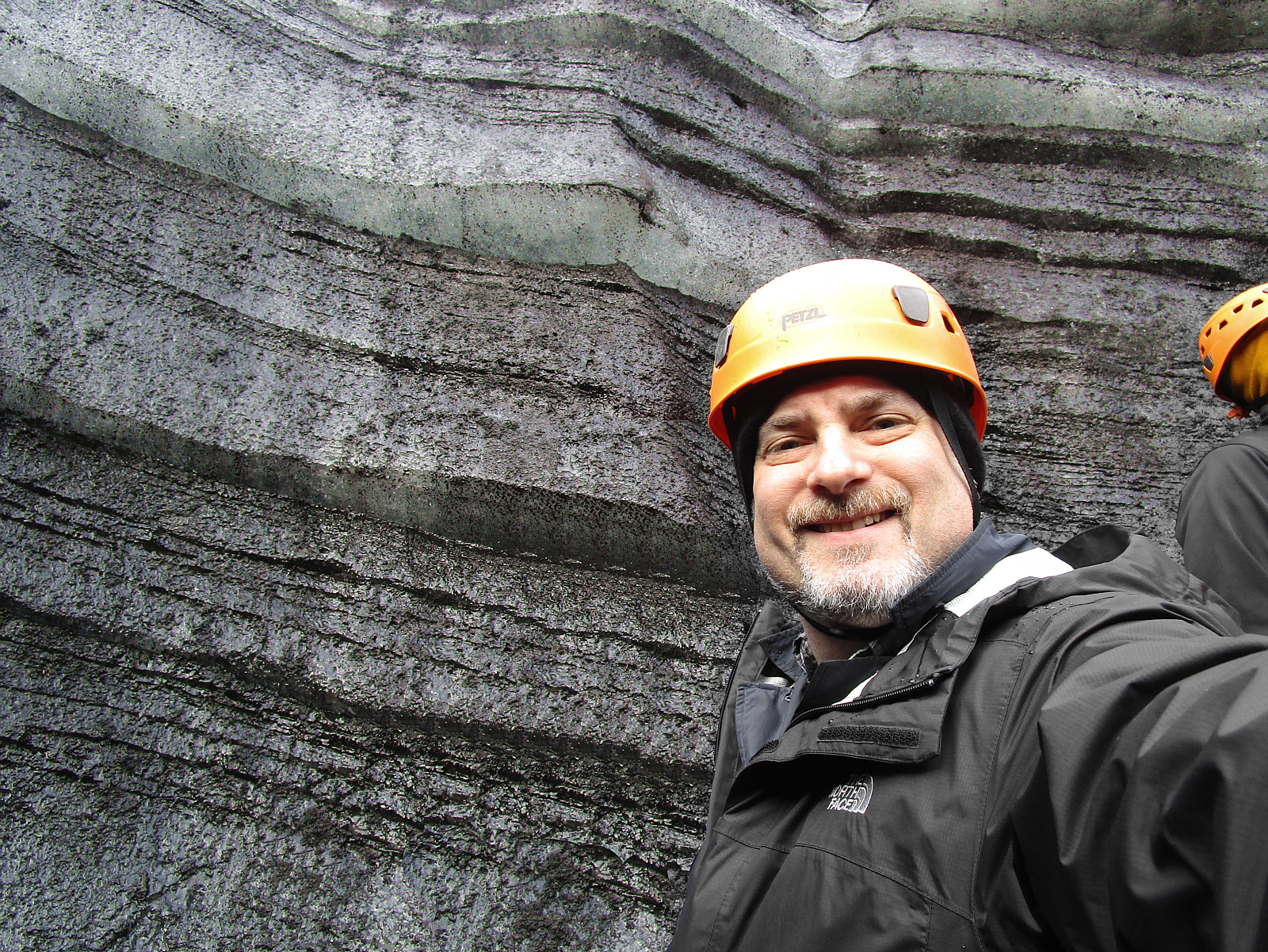
At the end of the cave, it opens up to an outside area and I take a quick self-portrait while wondering what keeps hitting me on the head. It's small rocks rolling off the top of the ice wall. Like all glaciers, this one picks up rocks as it moves along, and eventually these rocks melt through the ice or fall off -- in this case, 'beaning' visitors on the head every few minutes. So these helmets make a lot of sense -- and we're happy to have them.


